Last updated 2026-07-24
TL;DR
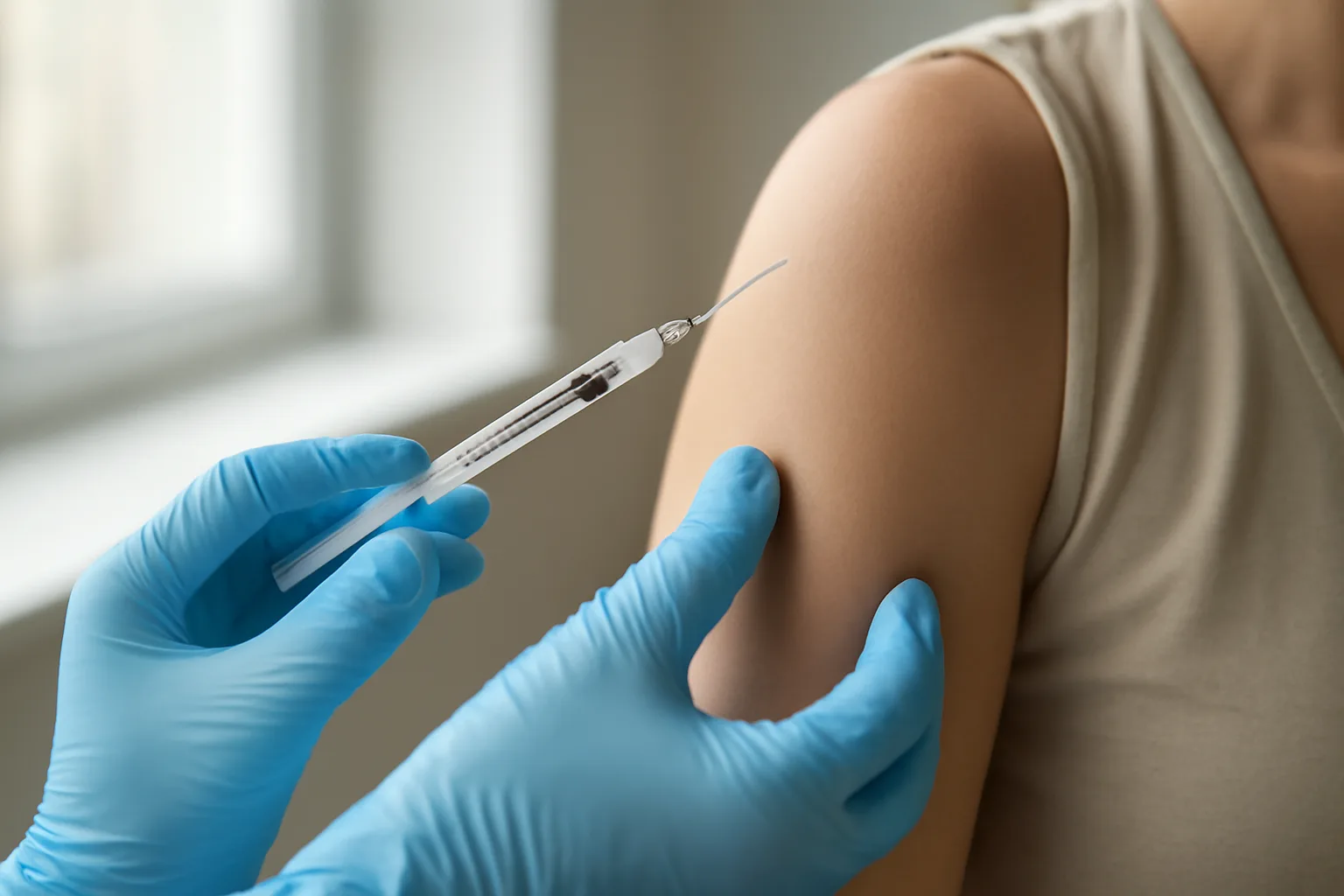
NAD+ injections are typically given subcutaneously in the abdomen, outer thigh, or upper arm, the same fatty tissue used for insulin or B12 shots. Site choice mostly affects comfort and injection-site reaction risk, not how much NAD+ reaches your blood. Rotating sites and going slow reduces the flushing and cramping that make NAD+ injections notorious.
Where do you actually inject NAD+ on the body?
Most protocols use subcutaneous injection into one of three spots: the abdomen (avoiding a two-inch ring around the navel), the outer thigh, or the back of the upper arm. These are the same sites used for insulin, B12, and semaglutide injections, chosen because the subcutaneous fat layer there is thick enough to avoid hitting muscle or a vein with a short needle. Some clinics do intramuscular NAD+ injections instead, usually in the glute or deltoid, using a longer needle. Intramuscular delivery is more common when the injected volume is small and concentrated. Neither site has been formally compared for NAD+ absorption in humans, so the choice comes down to needle length, injection volume, and what the prescribing clinic's protocol calls for rather than a clear superiority of one location. The abdomen is the most forgiving site for self-injection because you can see what you're doing and there's more fat to work with for most adults. The thigh is a reasonable second option, especially for people who find ab injections uncomfortable. The upper arm is harder to reach solo and is more often used when someone else is giving the shot.
Does injection site affect how well NAD+ absorbs?
Nobody has published a head-to-head pharmacokinetic study comparing NAD+ absorption across injection sites in humans. That's a real gap, and it means claims that one site is 'better absorbed' than another are not backed by data. What is well established is that NAD+ is a large, charged molecule (nicotinamide adenine dinucleotide, first structurally characterized in 1975 [1] and crystallized even earlier [2]), which limits how efficiently it crosses cell membranes compared to a small molecule like nicotinamide. That basic chemistry is why route (injection versus oral versus nasal) matters more than which patch of skin you use. Within subcutaneous injection, blood flow to the local tissue and how slowly you push the plunger likely matter more than abdomen versus thigh versus arm. Slow injection over 60 to 120 seconds is the most consistent advice from providers who use NAD+ regularly, because pushing it fast into any site tends to trigger the flushing, chest tightness, and cramping NAD+ injections are known for. That's a rate-of-delivery issue, not a location issue.
Subcutaneous vs intramuscular NAD+ injection: what's the difference?
Subcutaneous (SubQ) means the needle goes into the fat layer just under the skin. Intramuscular (IM) means it goes deeper, into muscle tissue. For NAD+, SubQ is more common in self-administered protocols because it uses a shorter, thinner needle and is easier to do safely at home. IM injection can deliver the dose a bit faster into circulation because muscle is more vascular than fat, but this hasn't been formally quantified for NAD+ specifically. IM shots also carry a slightly higher risk of hitting a small blood vessel or nerve if the site isn't chosen carefully, which is part of why glute and deltoid IM injections are usually done by a trained person rather than the patient themselves. For most people using NAD+ for energy or general wellness rather than in a clinical infusion setting, SubQ is the more practical default. It's what's used for the nad+ peptide injection approach most home-use protocols follow.
How do you rotate NAD+ injection sites to avoid irritation?
| Day 1 | Left abdomen | |
|---|---|---|
| Day 2 | Right abdomen | |
| Day 3 | Left outer thigh | |
| Day 4 | Right outer thigh | |
| Day 5 | Back to left abdomen (different spot) | Keep a simple log, even a note on your phone, marking which quadrant you used last. It sounds excessive until you find a sore lump and can't remember why. |
Rotate through your set of approved sites (left abdomen, right abdomen, left thigh, right thigh, and so on) rather than using the same exact spot every time. A simple rule: don't reuse a site within about 1 inch of the last injection for at least a week. Repeated injections in the same small patch of skin can cause lipohypertrophy, a lumpy thickening of fat tissue, which is well documented with other frequently self-injected drugs like insulin. NAD+ hasn't been specifically studied for this, but the mechanism (repeated trauma and local inflammation in the same tissue) is generic to subcutaneous injection, not NAD+-specific, so the same rotation logic applies. A basic rotation schedule looks like this: | Day | Site |
What does an NAD+ injection feel like and why does it burn or flush?
A stinging or burning sensation during and right after the injection is the most commonly reported effect, along with facial flushing, a racing heart for a few minutes, or mild nausea. These aren't allergic reactions in most cases. They track with how fast the NAD+ is pushed in and, to some degree, with total dose. NAD+ is involved in redox reactions throughout the cell (it's literally a coenzyme for hundreds of enzymes [3]), and rapid local concentration changes at the injection site plus systemic circulation seem to be what triggers the acute flushing feeling. Going slower, using a smaller injection volume, and splitting a larger dose across two sites are the practical fixes clinics recommend, though none of this has been tested in controlled trials specific to NAD+ injection technique. If the burning is severe, lasts more than a few minutes, or comes with hives, swelling beyond the injection site, or trouble breathing, stop and treat it as a possible allergic reaction, not routine NAD+ discomfort.
How much NAD+ should you inject and does dose change by site?
Dose doesn't change based on injection site. A typical subcutaneous NAD+ dose in wellness protocols ranges from roughly 25mg to 100mg per injection, though clinics offering higher-concentration products may format doses up to 500mg for less frequent dosing. There's no clinical consensus dose for NAD+ injection because there's no FDA-approved NAD+ injectable product; it exists in this space through compounding pharmacies operating under 21 U.S.C. 353a [4]. What does change by site, slightly, is how much volume you can comfortably fit. The abdomen tolerates more volume per injection than the upper arm before it becomes uncomfortable, which is one practical reason larger doses often get split across two sites rather than injected into one spot at the arm. If you're unsure how to translate a prescribed milligram amount into the actual volume to draw up, a nad+ injection dosage calculator walks through the math based on your vial's concentration, which is safer than eyeballing it.
Is NAD+ injection legal and where does it come from?
There's no NAD+ injectable product with FDA approval; you won't find it in the Drugs@FDA database [5]. What exists in the market comes from state-licensed compounding pharmacies, which are permitted to prepare patient-specific formulations under section 503A of the Federal Food, Drug, and Cosmetic Act, codified at 21 U.S.C. 353a [4]. Compounders draw from a list of bulk drug substances that FDA has evaluated for use under 503A, published as the Bulks List at 21 CFR 216.23 [6], and a separate list for larger 503B outsourcing facilities at 21 CFR 216.24 [7]. FDA also maintains a running list of nominated bulk substances under review at 503A [8], and a substance's presence there doesn't mean FDA has approved or endorsed it for compounding; it means the nomination is being evaluated. This regulatory structure is exactly why NAD+ injection availability, purity, and even dose strength varies by pharmacy. Reading where a provider sources compounded NAD+ from, and whether that pharmacy is licensed and inspected, matters more for safety than which brand name is on the box. For a rundown on how to vet a source, see where to get nad+.
NAD+ injection vs IV vs nasal spray: which route actually works better?
Route determines how much NAD+ reaches your bloodstream intact and how fast. IV infusion delivers NAD+ directly into the vein, bypassing absorption barriers entirely, which is why IV protocols can push much higher total doses (often hundreds of milligrams to a few grams over hours) than injection allows in one sitting. The tradeoff is time (IV sessions run one to four hours) and cost. Subcutaneous or intramuscular injection delivers a smaller volume faster (minutes, not hours) but the NAD+ still has to enter the bloodstream through capillary uptake from the tissue, which is a less complete process than direct IV delivery. Nasal spray relies on absorption through nasal mucosa, which is convenient and needle-free but the mucosal surface area and absorption efficiency for a molecule NAD+'s size is genuinely the least well characterized of the three routes. Here's the honest comparison:
| Route | Typical dose range | Session time | Bioavailability certainty | |
|---|---|---|---|---|
| IV infusion | 250mg to 1000mg+ | 1 to 4 hours | Highest (direct vein delivery) | |
| Subcutaneous/IM injection | 25mg to 500mg | 1 to 5 minutes | Moderate, not directly measured across sites | |
| Nasal spray | Lower per-dose, more frequent | Seconds | Least characterized, no human PK consensus | |
| Oral (NMN/NR precursors) | 250mg to 1000mg+ | Seconds | Depends on gut metabolism before reaching cells | No peer-reviewed human trial in this research area directly ranks these four routes by bioavailability in the same subjects, so this table reflects mechanism and clinical convention, not a single definitive study. For a fuller route-by-route walkthrough, see nad+ nasal spray vs injection. |
How is NAD+ injection different from taking NMN or NR orally?
Oral NMN (nicotinamide mononucleotide) and NR (nicotinamide riboside) are precursors, not NAD+ itself. Your body has to convert them into NAD+ through the salvage pathway after they're absorbed through the gut, a step that injected NAD+ skips entirely because it's already the finished molecule. The salvage pathway is a well-described biological process; nicotinamide phosphoribosyltransferase (NAMPT) is the rate-limiting enzyme in NAD+ salvage, and its role is significant enough that researchers have explored targeting it therapeutically, including in cancer metabolism research on acute myeloid leukemia [9]. Whether taking a precursor pill produces the same net increase in tissue NAD+ as an injection of NAD+ itself has not been settled by direct comparative human trials. What's true either way: NAD+ levels reliably decline with age, this is well supported across multiple lines of research including reviews on NAD+ biosynthesis in aging and neurodegeneration [10]. What's not established is that restoring NAD+ levels, by any route, extends healthspan or lifespan in humans. Most of the mechanistic case for that comes from cell and animal work, like studies on senescence-associated phenotypes [11] or stem cell metabolism [12], not human longevity trials. Be skeptical of anyone selling NAD+ injections with a firm claim that they'll extend your life.
What are the risks and side effects specific to the injection route?
Local injection-site reactions are the most common issue: redness, mild swelling, itching, or a small bruise. These usually resolve within a day or two and don't require treatment beyond an ice pack if needed. Systemic side effects reported with NAD+ injection include flushing, lightheadedness, brief chest tightness, nausea, and headache, most of which pass within 15 to 30 minutes. These appear tied to injection speed and dose more than to any specific injection site, as covered above. Infection risk is a real, if uncommon, concern with any injection, and it's entirely technique-dependent: alcohol-swab the site, use a new sterile needle every time, never reuse needles, and don't inject through broken or irritated skin. This is generic injection safety, not something unique to NAD+, but it's worth repeating because NAD+ injection is often self-administered at home without a clinician in the room. If you notice worsening redness, warmth, or pus at an injection site days after the fact, that's a sign of possible infection and needs medical attention, not another injection at the same spot.
Who should avoid NAD+ injections or check with a doctor first?
Anyone pregnant or breastfeeding, anyone with a bleeding disorder or on blood thinners (injection sites bruise more), and anyone with a known allergy to any excipient in a specific compounded formulation should talk to a prescriber before starting NAD+ injections, since compounded products vary by pharmacy and formulation. People managing chronic conditions where NAD+ metabolism has documented disease relevance, including nonalcoholic fatty liver disease [13], cardiovascular disease [14], or chronic kidney disease [15], should loop in the physician managing that condition rather than adding NAD+ injections independently, since the interaction between supplemental NAD+ and these disease states in humans isn't well studied despite mechanistic interest in the lab. This isn't a reason to panic about NAD+ injection generally. It's a reason to treat it like any other prescription-adjacent product: get it from a legitimate, provider-reviewed source, tell your doctor you're using it, and don't stack it with other new interventions at the same time so you can actually tell what's doing what.
Frequently asked questions
Where on the body do you inject NAD+?
Most subcutaneous NAD+ protocols use the abdomen (avoiding a two-inch ring around the navel), the outer thigh, or the back of the upper arm, the same fatty tissue used for insulin or B12 injections. Some clinical protocols use intramuscular injection into the glute or deltoid instead. Site choice affects comfort more than absorption, based on current evidence.
Is NAD+ injection subcutaneous or intramuscular?
Both are used. Subcutaneous (fat layer) is more common for self-administered, at-home protocols because it uses a shorter needle and is easier to do safely without training. Intramuscular (muscle tissue) is used in some clinical settings, often for smaller-volume, more concentrated doses, and is usually given by a trained provider.
Why does an NAD+ injection burn or sting?
Stinging, burning, and flushing are the most commonly reported effects and appear linked to how fast the NAD+ is pushed into the tissue and to total dose, rather than to a specific injection site. Injecting slowly over 60 to 120 seconds and splitting larger doses across two sites are the practical fixes most providers recommend.
How often should you rotate NAD+ injection sites?
Rotate through a set of sites (both sides of the abdomen, both thighs) and avoid reusing the exact same small spot within about a week. This reduces the risk of lipohypertrophy, a lumpy thickening of fat tissue from repeated injections in one place, a well-documented risk with frequent subcutaneous injection generally.
Does injection site change how much NAD+ you absorb?
No human study has directly compared NAD+ absorption across different subcutaneous or intramuscular sites, so there's no evidence one site absorbs better than another. What's better supported is that injection speed and total dose affect side effects, and that route (IV vs injection vs nasal vs oral) matters more for absorption than the specific spot on the skin.
What's the difference between NAD+ injection and NAD+ IV therapy?
IV delivers NAD+ directly into a vein over one to four hours, allowing much higher total doses and bypassing tissue absorption entirely. Injection delivers a smaller volume in minutes through subcutaneous or intramuscular tissue, where it still has to enter circulation via capillary uptake. IV is slower per session but delivers more NAD+ per visit.
Are NAD+ injections FDA-approved?
No. There's no FDA-approved NAD+ injectable product listed in the Drugs@FDA database. Compounded NAD+ injections come from state-licensed pharmacies operating under section 503A of the FD&C Act (21 U.S.C. 353a), which permits patient-specific compounding using substances FDA has evaluated on its Bulks List under 21 CFR 216.23.
Can you inject NAD+ yourself at home?
Many people self-administer subcutaneous NAD+ injections at home after a provider prescribes it and explains technique, similar to how people self-inject insulin or B12. It requires sterile technique, site rotation, and slow injection to limit flushing. Anyone new to self-injection should get hands-on instruction first rather than learning from a video alone.
What's the right dose for an NAD+ injection?
There's no single clinical consensus dose. Wellness protocols commonly range from about 25mg to 100mg per subcutaneous injection, with some higher-concentration products formatted up to 500mg for less frequent dosing. Dose depends on the compounding pharmacy's formulation and your provider's protocol, not on which injection site you use.
Is NAD+ injection better than NMN or NR pills?
Injected NAD+ is the finished molecule; oral NMN and NR are precursors your body must convert into NAD+ through the salvage pathway after gut absorption. No direct human trial has compared net tissue NAD+ increase between injected NAD+ and oral precursors, so which route delivers more usable NAD+ to cells isn't settled by current evidence.
Does raising NAD+ levels actually slow aging or extend lifespan?
NAD+ levels declining with age is well supported by research. Whether restoring those levels, by injection, IV, nasal spray, or oral precursor, extends healthspan or lifespan in humans has not been established by clinical trials. Most of the supporting evidence for longevity benefits comes from cell and animal studies, not confirmed human outcomes data.
What side effects should you watch for after an NAD+ injection?
Expect possible local redness, mild swelling, or bruising at the injection site, plus transient flushing, lightheadedness, chest tightness, or nausea that usually resolves in 15 to 30 minutes. Severe or prolonged reactions, hives, swelling beyond the injection site, or breathing trouble are not typical and need immediate medical attention.
Sources
- PubMed, Molecular structure of nicotinamide adenine dinucleotide (Nature, 1975): NAD+'s molecular structure was characterized, establishing it as a large, charged coenzyme molecule.
- PubMed, Crystallization of nicotinamide adenine dinucleotide (J Biol Chem, 1964): NAD+ was successfully crystallized, an early foundational step in characterizing its physical properties.
- PubMed, Nicotinamide adenine dinucleotide: beyond a redox coenzyme (Org Biomol Chem, 2007): NAD+ functions as a coenzyme in redox reactions across numerous cellular enzyme systems.
- Cornell Legal Information Institute, 21 U.S.C. 353a: Section 503A of the FD&C Act permits state-licensed pharmacies to compound patient-specific drug formulations like NAD+.
- FDA, Drugs@FDA database: No FDA-approved NAD+ injectable product is listed in the Drugs@FDA database.
- eCFR, 21 CFR 216.23 (503A Bulks List): FDA maintains a list of bulk drug substances evaluated for use in 503A pharmacy compounding.
- eCFR, 21 CFR 216.24 (503B Bulks List): A separate bulk substances list applies to larger-scale 503B outsourcing facility compounding.
- FDA, Bulk drug substances nominated for use in compounding: FDA maintains a running list of bulk substances nominated for evaluation under 503A compounding rules.
- PubMed, Starving leukemia: NAMPT-dependent NAD+ salvage in AML (Transl Cancer Res, 2026): NAMPT is the rate-limiting enzyme in NAD+ salvage pathway metabolism and a target in AML metabolic research.
- PubMed, NAD+ biosynthesis in metabolism, aging, and neurodegeneration (Holist Nurs Pract, 2021): NAD+ biosynthesis and levels are linked to aging and neurodegeneration processes in the research literature.
- PubMed, Targeting senescence and recycling intracellular NAD+ (ACS Nano, 2025): A strategy targeting intracellular NAD+ recycling attenuated senescence-associated phenotypes in study models.
- PubMed, NAD+ induces bivalent metabolism in human embryonic stem cells (Stem Cells, 2020): NAD+ was shown to induce a bivalent metabolic state and help maintain pluripotency in human embryonic stem cells.
- PubMed, Therapeutic potential of NAD+ for nonalcoholic fatty liver disease (Hepatology, 2016): NAD+ has documented mechanistic relevance to nonalcoholic fatty liver disease in preclinical research.
- PubMed, Effects of NAD+ in cardiovascular diseases (Genes & Diseases, 2022): NAD+ has documented molecular mechanisms and therapeutic relevance in cardiovascular disease research.
- PubMed, PGC-1α, NAD+ and renal stress resistance (Nephron, 2017): NAD+ and PGC-1α pathways are linked to renal stress resistance in kidney disease research.